Behind the story
Cernunnos, the Celtic horned god
Where does the deer-skulled god of the Chronicles of the Forgotten God come from? From two very different stories: an ancient deity almost nothing survives of, and a figure invented in the twentieth century.
Cernunnos, the stag god of Gaul
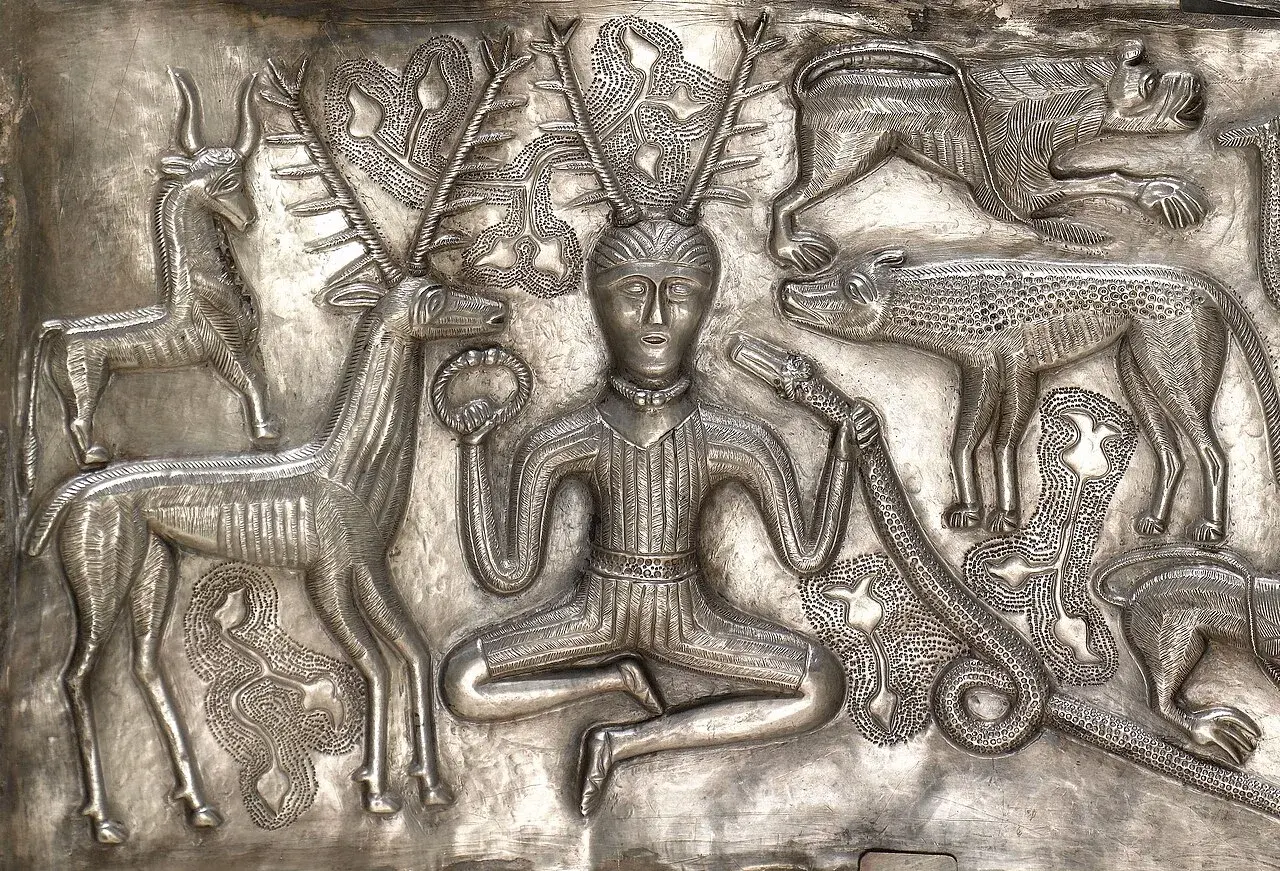
Cernunnos, “the horned one” of the Celts, is a god known only from Gaul, tied to animals and to the cycles of nature. Unusually, no ancient text describes him. He survives today only through about a dozen images and a single inscription.
The most famous of them appears on the Gundestrup cauldron, found in Denmark in 1891 (probably made in the Balkans in the first century BC). It shows a figure sitting cross-legged and surrounded by animals, wearing antlers, a torc in one hand and a ram-headed serpent in the other.
His name appears just once, on the Pillar of the Boatmen, raised in Roman Paris in the first century AD and now kept at the Musée de Cluny. His cult can be traced back to the fourth century BC, and he was never merged with a Roman god after the conquest. Everything else remains guesswork, and it is this scarcity of evidence that makes him both fascinating and mysterious: he reaches us like a shadow risen from the depths of ancient forests and wild lands, from a time when humans still lived by the laws of earth and sky.
Wicca's Horned God, a twentieth-century invention

The “Horned God” celebrated by Wicca is a composite deity born in the twentieth century thanks to Gerald Gardner, drawing on Cernunnos, Pan, the English Herne the Hunter and other European mythological figures. He became the figurehead of a duotheistic neopaganism: he stands for wild life, the sun, the turning of the seasons, death and rebirth, beside the Goddess in her three faces (maiden, mother and crone).
The birth and the spread of this imagery owe much to a theory by the historian Margaret Murray, who argued that persecuted witches had kept an older pagan religion alive. Scholars have since rejected that theory, but the symbol still feeds a rich and powerful folklore, sometimes demonised and wrongly equated with Satan or the goat-headed Baphomet.
A rebuilt pantheon
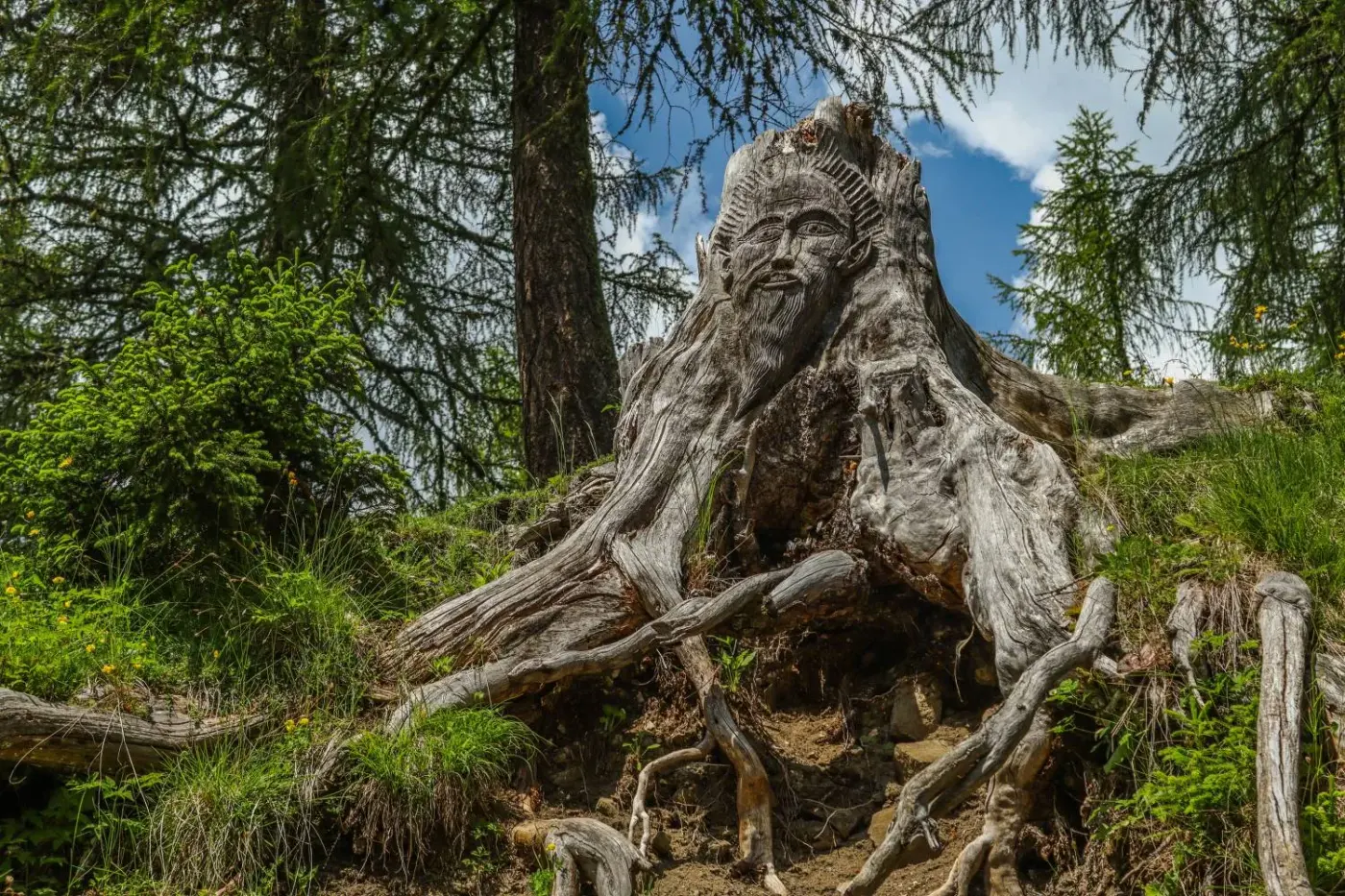
The Chronicles bring together deities who were never worshipped side by side: Cernunnos belongs to the Celtic world of the continent, Brigid is Irish, Pan is Greek, and the Green Man belongs to mediaeval churches.
This syncretic mix reflects the very values and symbols that modern paganism has been drawing on for a century.
The hero of the graphic novel is a deity recomposed for the modern age, and he knows it. He is no longer an ancient god left intact, but a pale reflection of his former greatness: he dimly remembers being worshipped under other names.
So the hero carries the drama and the question at the heart of the story: What becomes of a god who no longer quite knows who he is? Is he simply destined to vanish into nothingness?
Keep reading
Sources
Follow the journey
Eight chapters, 162 pages. Leave your address to hear from me when the campaign opens.
By signing up, you agree to receive a welcome email, the launch announcement and occasional news about the book. Your address is used for nothing else. Unsubscribe in one click. Learn more